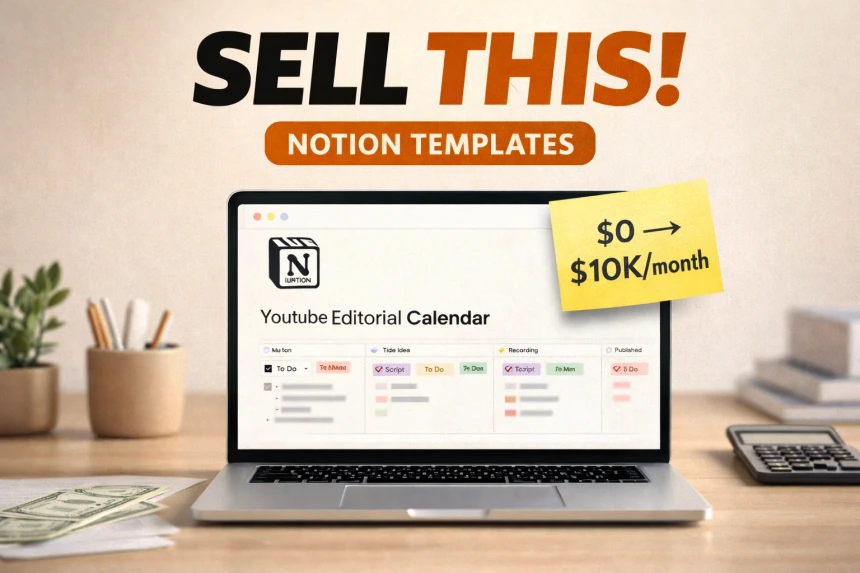

How to Create & Sell Notion Templates (Beginner to $10K/Month Guide)
Learn how to create and sell Notion templates online. Discover profitable ideas, marketing strategies, and how to scale your income.
I’ll never forget the first Notion template I sold. It was nothing crazy—just a messy life dashboard I built for myself because my brain couldn’t keep up with work tasks, habits, and random ideas anymore. I cleaned it up, added some colors that didn’t look like a 2010 Excel sheet, and tossed it on Gumroad for $15. First month? Eight sales. $120 while I was mostly ignoring it. Felt like free money.
Fast forward to 2026, and people are still making serious cash with these things. Some quiet creators pull $5k–$15k a month selling planners, second brains, content systems, you name it. It’s not rocket science, but it’s not “post once and retire” either. If you’re decent at organizing your own chaos in Notion, you can turn that into something people pay for. Here’s how it actually works, from someone who’s done it instead of just watching YouTube tutorials.
Why Notion Templates Still Print MoneyHere’s the thing: Notion is everywhere now. Students, freelancers, parents, startup founders—they all use it, but most suck at building good systems. That’s your opening. People don’t want to spend twenty hours learning relational databases and synced blocks. They want something that works out of the box.
Most people don’t realize how emotional this purchase is. Buying a template feels like buying hope—“This will finally fix my messy life.” When your template delivers even half of that, they tell their friends and come back for more. I’ve seen simple habit trackers outsell fancy AI-integrated monsters because they were actually pleasant to use every day.
Finding Ideas That Actually SellDon’t start by trying to build the ultimate everything template. That’s how you burn out and sell nothing. Solve one annoying problem really well.
Real example: A teacher I follow made a simple grade tracker + lesson planner for fellow educators. Nothing revolutionary, but it saved them hours every week. She priced it at $29 and quietly hits four figures most months on Etsy. Another guy built a content creator OS—ideas bank, calendar, analytics dashboard. One focused template beats a bloated one every time.
Good niches right now:
- Student life (exam trackers, note systems)
- Freelancer finances and client management
- Content calendars for YouTubers/TikTokers
- Family/home management (meal plans, chore charts)
- Second brain / PKM setups (but make them beginner-friendly)
- Fitness or habit dashboards
- 2026 goal planners (seasonal stuff still works)
Scroll Reddit’s r/Notion or Facebook groups. Look for posts like “How do I track X without it becoming a chore?” That’s gold. Build what you’d actually use yourself. Your authenticity shows.
Actually Building the Template (Step by Step, No Fluff)Open Notion. Start blank.
First, sketch on paper or in a quick page what pages you need. Dashboard homepage? Databases for tasks, notes, habits? Relations and rollups? Keep it tight. Overly complicated templates scare people off.
Use clean design:
- Consistent icons (Notion’s built-in or free sets)
- Nice color scheme—two or three accent colors max
- Buttons, toggles, and callouts for guidance
- Placeholder text like “Add your goals here” so it’s not intimidating
Add instructions inside the template itself. A “How to Use This” section with screenshots or short videos embedded if you want to go fancy. Pre-fill a few example rows so buyers see the magic immediately.
Test it like crazy. Use it for a week straight. Break it on purpose, fix the bugs. Share with a couple friends for feedback. I once launched something with a broken relation that made half the databases useless. Embarrassing, but I fixed it fast and buyers appreciated the quick update.
Pro move: Make a duplicate link version for previews. People love clicking around before buying.
Making It Look Professional (The Part Most Skip)This is where cheap templates die and $47 ones thrive. Spend time on aesthetics. Use cover images that match the vibe. Add subtle dividers, headings with emojis that actually make sense.
I’m not a designer, but Canva helps with custom icons or banners. Keep mobile view in mind too—lots of people use Notion on their phones. If it looks like garbage on mobile, they’ll refund.
Turning It Into a Sellable ProductOnce it’s ready:
- Make the page public.
- Click Share → “Publish” or enable “Duplicate as template.”
- Get that clean share link. Test duplicating it yourself in a new workspace.
Create a sales page. Good photos (mockups on devices look pro), bullet points on what it includes, who it’s for, and testimonials if you have any. Even “I use this daily and it cut my planning time in half” works early on.
Where to Sell in 2026 (The Real Breakdown)Etsy: Still massive for discovery. Search “Notion template” and you’ll see why. Great for planners and visual stuff. Fees add up (listing + transaction + ads), but traffic is real. One printable-style Notion shop I know does well here.
Gumroad: Creator favorite. Easy, beautiful checkouts. 10% fees hurt on low-ticket, but you own your list. Good for bundles and updates.
Payhip: My go-to lately. Lower fees (5% free tier, 0% on Pro), marketplace exposure, clean. Lots of creators switching here and keeping more money.
Notion’s own Marketplace: Official, credibility boost. They take a cut too, but being featured helps. Need a solid creator profile.
Your own site (Shopify or whatever): Best long-term. Full control, no platform risk.
Start on one or two. I run Payhip as main + Etsy for extra eyes. Don’t spread too thin at first.
Pricing That Makes Sense$9–$19 for simple ones. $29–$49 for solid systems. $79+ if it’s comprehensive with videos or ongoing updates.
Bundle: Basic dashboard $19, full life OS $59. Upsells work great.
Test prices. I once raised one from $19 to $29 and sales barely dipped while revenue jumped. Value pricing beats “what feels fair.” If it saves someone hours every week, $39 is cheap.
Getting People to Buy (Marketing Without Burning Out)This part separates hobbyists from people making real money.
Free routes:
- Post your template in relevant Reddit subs (with disclosure)
- Pinterest pins with pretty mockups—evergreen traffic for planners
- Threads/X/Instagram: Share tips and “the template that helped me do this”
- Free version or lite template to build email list
Paid: Once validated, small Meta or Pinterest ads can scale.
Story time: A creator friend started posting daily Notion tips on TikTok. Never hard sold. Just “here’s how I track my writing” and linked her template in bio. Hit consistent $4k–$8k months. No big following needed if you’re helpful.
Email list is king. Offer a free mini-template, nurture, then sell the premium stuff. Updates to existing buyers create repeat revenue.
Scaling and Common PitfallsOnce you have one winner, make variations. Same base but for different niches. Or add advanced versions.
Pitfalls I’ve seen (and done):
- Making it too complicated
- Ignoring mobile
- No instructions
- Bad mockups
- Quitting after slow first month
- Copying others exactly (make it yours)
Support matters. Answer questions fast. Offer refunds if it’s genuinely not a fit. Builds reputation.
Some people hit $10k+ with one viral template. Others stack ten smaller ones. Both work. One guy reportedly made half a million focusing on beginner-friendly systems. Wild, but shows what’s possible.
My Honest Opinion After Doing ThisNotion templates won’t make you rich overnight, but they can become a damn good side income or even full business with patience. The barrier to entry is low, which means competition, but most templates out there are mediocre. Do better—cleaner, more useful, prettier—and you win.
I love this because you’re selling systems, not just files. When someone messages you saying your template helped them finally stick to habits or ship their project, it hits different.
Start stupid small. Tonight, build one page solving a problem you have. Duplicate it, clean it, price it cheap, put it somewhere. Tell ten people. Tweak based on what they say.
The first sale feels magical. The tenth feels validating. The hundredth? That’s when you realize you built something real.
You don’t need to be a Notion wizard. You just need to be one step ahead of the people who need help. Go make your first one. I’ll be over here cheering for the underdogs who actually ship.
Now stop reading and open Notion. Your future buyers are waiting.