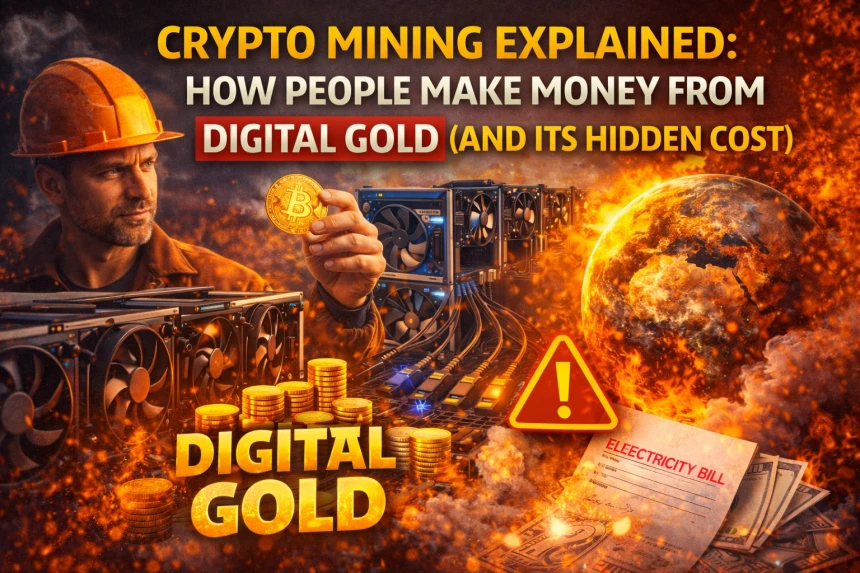

Crypto Mining Secrets: How People Earn Millions (At What Cost?)
Crypto mining can generate real money—but it comes with a hidden cost. Discover how it works, how people profit, and why it’s controversial.
You’ve probably heard wild stories about gold miners striking it rich with a single lucky find, right? Pickaxes flying, dirt everywhere, and that one big “Eureka!” moment. But what if we told you there’s a modern-day version happening right now – except it’s all online, no shovels required, and it’s powering cryptocurrencies like Bitcoin? Welcome to the world of crypto mining. It’s how some of the biggest digital coins out there process everyday transactions and even create brand-new tokens. By design, it’s like digitally digging for gold – high-stakes, competitive, and full of surprises.
If you’re a regular person scrolling through your feed wondering whether to dip your toes into crypto investing or just stay safe on the sidelines, you’re not alone. Mining might sound like something only tech geniuses do in secret basements, but it’s actually a fascinating process that anyone with a decent internet connection and some serious computing power can try. Stick with us as we break it down step by step – no jargon, no boring lectures, just the real deal on how this digital mine works and whether it’s worth the hype (or the huge electricity bill).
What is crypto mining?
At its core, cryptocurrency mining is all about using powerful computers to keep a special kind of blockchain running smoothly. These are the proof-of-work (or PoW) blockchains – the tech backbone behind coins like Bitcoin. Every time someone sends or receives crypto, those transactions need to be checked and recorded forever. That’s where miners come in. They add fresh “blocks” of data to the chain, which basically locks in the latest bunch of transactions and, at the same time, creates brand-new digital coins as a reward.
Think of it like this: the “work” in proof-of-work isn’t some easy chore. Miners are in a nonstop race, throwing massive amounts of computing muscle at a super-tough math puzzle. The first one to crack it gets the glory – they add the new block, pocket some transaction fees from users, and scoop up freshly minted crypto tokens. It’s exciting, it’s competitive, and it’s what keeps the whole system honest and secure.
Now, this isn’t your average laptop job. Crypto mining demands serious horsepower, measured in something called hash rate – basically, how many “hashes” (those complex cryptographic calculations) your setup can churn out every second. A hash is just a fancy way of turning messy transaction data into a fixed string of characters that acts like a digital fingerprint. To win this race, miners rely on specialized gear like ASICs (those custom-built chips made just for mining) or high-end GPUs (the same graphics cards gamers love, but cranked up to eleven).
The best part? It’s open to pretty much anyone. Got internet? Got enough computing power to go head-to-head with others? You can jump in and start mining. That’s what makes it so decentralized – no single company or government controls it. Instead, thousands of regular folks (and some big operations) around the world are pitching in, which actually makes the entire blockchain way harder to hack or mess with. It’s like a giant, global team effort keeping the digital money system safe and running 24/7.
How does crypto mining work?
Okay, so you get the big picture – but how does the actual magic happen? Crypto mining isn’t as simple as flipping a switch, but once you see the steps, it starts to make sense. It’s a bit like a high-tech relay race where everyone’s trying to be the fastest. Here’s exactly how it unfolds, from the moment someone clicks “send” on a crypto transaction to the second a new block joins the chain.
First up, all the new cryptocurrency transactions that people have started but not finished yet get tossed into a big waiting area – miners call this a “pool.” Each one carries details about who’s sending what to whom, plus a small processing fee that the sender pays to get it done quicker. It’s like a queue at a busy bank counter, but digital and global.
Next, miners grab a bunch of these unverified transactions and bundle them together into what’s called a “block.” If the pool is overflowing (which it often is during busy times), smart miners pick and choose. They might go for smaller transactions that fit easily, older ones that have been waiting forever, or the ones with the juiciest fees attached. It’s strategic – like choosing the best ingredients for the perfect recipe before the cooking contest starts.
Now comes the heart-pounding part: the actual race to solve a crazy-complex math puzzle. With the block ready, miners fire up their hardware and start guessing a special secret number called a “nonce.” They combine this nonce with all the block’s data and run it through the hashing process until – bingo! – they get a hash that matches exactly what the blockchain rules demand. It’s not guesswork you can do in your head; it takes insane computing power, and every second counts.
The lucky miner who cracks it first doesn’t keep it a secret. They shout it out to the entire network by broadcasting that winning hash. Picture a 1800s California Gold Rush prospector yelling “Eureka!” at the top of their lungs – that’s the vibe. Everyone else in the blockchain world stops what they’re doing to check if it’s legit.
Other miners quickly jump in to double-check the solution. They verify that the hash is spot-on and follows all the protocol rules. Once enough of them give the thumbs-up (the exact number depends on the blockchain’s own rules), consensus is reached. It’s like a group vote ensuring no one cheated.
Boom – the new block gets added to the ever-growing blockchain. The winning miner processes all those transactions inside it, and suddenly, they’re officially confirmed and irreversible. Depending on the rules of that particular cryptocurrency, new digital tokens might get minted right then and there as a bonus.
Finally, the rewards roll in. The miner who nailed it gets paid – transaction fees from the users plus any freshly created coins. Everything happens automatically, almost instantly after the block is added. It’s efficient, it’s fair (in a competitive way), and it’s what keeps miners motivated to keep the system alive.
Pros of cryptocurrency mining
Let’s be real – there’s a lot to get excited about when it comes to crypto mining. It’s not just some nerdy hobby; it’s genuinely changing how digital money works.
For starters, it makes blockchains actually function. Without miners, Bitcoin and other proof-of-work systems would grind to a halt. No transactions would get verified, and no new coins would ever be created. Mining is the engine that keeps everything moving forward.
It also boosts security in a huge way. Because mining is spread out across thousands of independent computers worldwide, it’s incredibly tough for any bad actor to take control. That decentralized setup is what makes proof-of-work blockchains feel so rock-solid.
Then there’s the reward system – it’s brilliantly efficient. Miners who put in the work automatically earn transaction fees and new tokens. No middlemen, no waiting for approval. It’s a built-in way to hand out digital goodies to the people actually contributing to the network.
And don’t forget the economic side. Crypto mining has opened doors for everyday tech enthusiasts everywhere. In places where electricity is cheap, people are turning spare computer power into real income. It’s creating jobs, businesses, and opportunities that didn’t exist a decade ago. Farmers in remote areas, young coders in cities – anyone with the right setup can get in on the action.
Cons of cryptocurrency mining
But here’s the flip side – and it’s pretty eye-opening. Crypto mining isn’t all rainbows and instant riches. A lot of the criticism it gets is totally fair, and you should know about it before jumping in.
The biggest headache? It guzzles electricity like there’s no tomorrow. We’re talking mind-boggling amounts of power – roughly the same as what entire midsize countries use in a year. The more popular the blockchain, the more miners pile in, and the more juice gets burned just to keep the competition going.
Then there’s the wallet-busting cost of equipment. Those specialized ASICs and GPUs aren’t cheap. For most regular folks, buying enough hardware to actually compete feels impossible. It’s a massive barrier that keeps a lot of people on the outside looking in.
Environmentally, it’s a tough pill to swallow. All that energy and all those machines mean big carbon footprints. Non-renewable power plants and the manufacturing of all that tech pump out greenhouse gases. Many people worry that the planet is paying a heavy price for our digital gold rush.
On top of that, the tech side is seriously complicated. You need to know your way around hardware, software, cooling systems, and constant updates. It’s not a “set it and forget it” kind of thing – the learning curve is steep and can scare off beginners.
Profitability is another rollercoaster. Mining popular coins like Bitcoin is getting tougher every day. More competition means you need even more machines just to stay in the game. Plus, many blockchains have built-in rules that slowly cut the rewards over time. What felt like easy money yesterday can turn into a struggle tomorrow.
Taxes add another layer of stress. Figuring out how to report your mining earnings correctly is a nightmare. Rules change from country to country, and one wrong move can land you in hot water with the taxman.
Security risks are real too. Hackers love targeting miners. Malware, ransomware, or straight-up cyberattacks can steal your rewards or even take over your equipment. One weak password or sketchy download, and poof – your hard work vanishes.
Finally, the whole operation comes with big operational and money risks. Hardware can break down or become outdated overnight. Electricity prices swing wildly, and so do crypto values. You could invest thousands today only to watch everything lose value next week. It’s exciting, but it’s definitely not for the faint-hearted.
The bottom line
At the end of the day, plenty of crypto miners will tell you the smartest move is to chase whatever coin is making the most profit right now. And yeah, that makes sense if your only goal is quick returns. But if you’re someone who thinks about the bigger picture – like the massive environmental toll – you might want to pause and look at the full story.
If Bitcoin or any other proof-of-work crypto is on your radar, do a little digging into how much energy it actually uses and what kind of footprint it leaves behind. Sometimes, switching to something like proof-of-stake or other greener ways of running a blockchain feels like a smarter, more responsible choice for the planet.
Crypto mining is wild, innovative, and full of potential. It’s opened up a whole new world of digital opportunity. But like any gold rush, it comes with real risks, real costs, and real questions about sustainability. Whether you decide to grab your virtual pickaxe and dive in or just watch from the sidelines, at least now you know exactly how this digital mine operates – and what it really takes to strike it rich. The choice, as always, is yours.