
$111.8 Billion Opportunity: Gasket & Seal Market Set for Growth
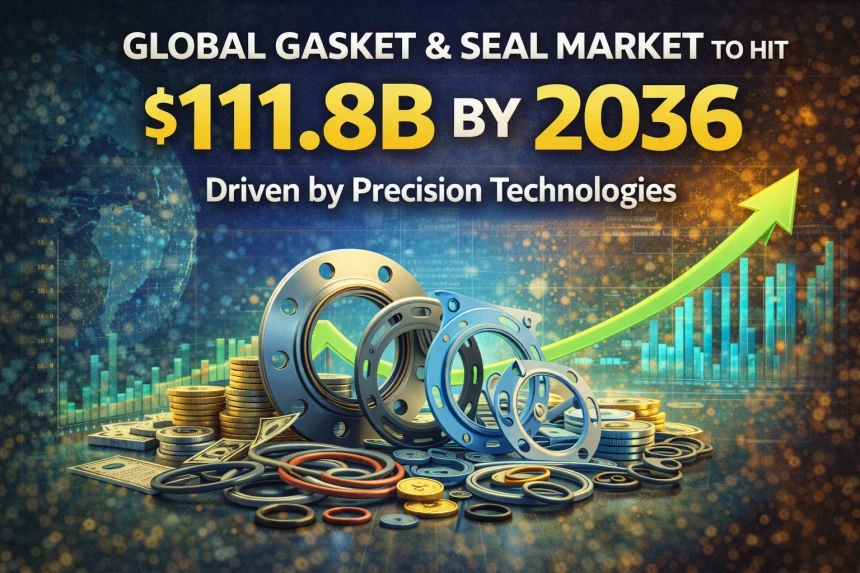
The gasket and seal market is set to reach $111.8B by 2036. Discover how precision engineering, EV demand, and industrial growth are driving this surge.
NEWARK, Del., April 15, 2026 — You probably don't spend much time thinking about gaskets and seals. Most folks don't. But try driving a car that leaks oil everywhere, or running a factory where chemicals keep escaping. Suddenly those small parts become pretty important.
A fresh report from Future Market Insights puts the global gasket and seal market at $90.6 billion this year. They see it hitting $111.8 billion by 2036, with growth ticking along at 2.1% per year. Not the kind of explosive jump that makes headlines, but in an industry this size, it still means real money changing hands and some noticeable shifts in what companies are asking for.
The quiet change happening now is that basic gaskets – the flat ones that just sit there – are slowly making way for seals that do a lot more. These newer designs handle movement, heat spikes, pressure changes, and even send signals when they're starting to wear out.
The Numbers, Plain and Simple- Market size in 2026: $90.6 billion
- Forecast for 2036: $111.8 billion
- Average yearly growth: 2.1%
- Seals take the biggest chunk: 63.4%
- Cars and trucks lead demand: 55.3%
- Regions picking up speed: South Asia Pacific, East Asia, North America
Demand stays strong wherever people need to stop leaks, cut downtime, and meet tighter safety rules. That covers everything from passenger cars to oil rigs and chemical plants.
What's Actually Pushing Things ForwardCar makers and factory owners have a few common headaches these days.
They used to rely on simple static gaskets for joints that don't move. Now they're switching to dynamic seals built for parts that spin, slide, or deal with constant vibration. Think drivetrains in vehicles, pumps in industrial setups, or robotic arms on assembly lines.
Electric vehicles added a whole new list of requirements. Battery packs need seals that manage heat properly so they don't overheat or freeze up. High-voltage components want materials that won't conduct electricity where they shouldn't. A small failure in these areas can lead to safety issues or big repair bills, so automakers are picky about what they use.
On the factory side, automation means machines run longer hours with fewer people watching them. That's created interest in seals that include sensors. The idea is simple: the seal itself can flag when it's getting close to failure, giving maintenance teams time to fix things before everything stops.
Regulators haven't made life easier either. Rules on emissions and accidental spills keep getting stricter. Companies in oil and gas or chemicals can't risk using cheap materials that might degrade quickly. They need elastomers and polymers that stand up to harsh conditions and pass tougher tests.
What the Market Actually Looks LikeSeals outsell traditional gaskets because so many applications involve moving parts. The 63.4% share for seals reflects that reality. Gaskets still handle plenty of static connections, but their relative importance has dipped.
Materials break down along similar lines. Non-metallic options – things like EPDM, NBR, FKM, and PTFE – account for 60.3% of the market. They're flexible and hold up against corrosion in normal conditions. Metallic versions get used when the pressure or temperature goes really high and nothing else will survive.
Automotive remains the heavyweight customer at 55.3%. Every engine, transmission, and now electric drivetrain needs reliable sealing. The rest of the demand spreads across industrial machinery, oil and gas work, chemical processing, and power generation.
The Supply Chain Behind It AllRaw materials come first. Petrochemical companies supply the elastomers and polymers while metal producers provide steel, graphite, and composites.
Manufacturers then shape those inputs into finished products – O-rings, rotary seals, custom gaskets – using molding, extrusion, and precision machining.
Tier-1 suppliers take those components and build them into larger assemblies, often working directly with car companies or equipment makers on design and testing.
End users include the big automakers, industrial equipment builders, and the maintenance teams that replace worn parts in the field.
More companies are tightening links in this chain through partnerships and local production. The goal is fewer delays, better quality control, and steadier costs after the supply shocks of recent years.
How Pricing Plays OutCosts have held fairly steady overall, though they react quickly when oil prices move because many elastomers trace back to petroleum. Seals built for electric vehicles or aggressive chemical environments carry higher price tags, and buyers accept that when reliability is critical.
Manufacturers try to manage expenses by setting up production closer to their main markets, adding automation where it makes sense, and negotiating longer contracts with suppliers.
Names You Might RecognizeA handful of global players sit alongside strong regional specialists. Competition focuses on new materials, custom engineering, and proving that a seal will perform exactly as promised in tough conditions.
Familiar companies in the space include Freudenberg & Co. KG, Dana Incorporated, ElringKlinger AG, Tenneco, SKF, Parker Hannifin, Trelleborg Sealing Solutions, and NOK Corporation.
Regional DifferencesSouth Asia Pacific stands out for speed of growth. India could see around 6.8% annual growth as its manufacturing base expands and more production shifts locally, helping bring costs down.
China and the broader East Asia region show solid momentum too, with projections near 6.0%. The focus there sits on upgrading factories and sharpening precision work.
North America tends to lead on adopting new tech – advanced compounds and sensor-equipped seals appear here first.
Europe, and Germany in particular, built its reputation on meeting high quality standards and navigating strict environmental rules, backed by a deep automotive tradition.
Australia sees steady demand tied to mining and heavy equipment that operates in remote, demanding conditions.
Directions the Industry Is HeadedMaterial scientists keep working on tougher, lighter, and less harmful options. Some seals now carry embedded sensors that feed data into monitoring systems. Electric vehicle applications have their own dedicated designs for thermal control and electrical insulation. And across the board, there's pressure to reduce any leakage that could harm the environment.
Real-World HeadwindsRaw material prices can jump without much warning. Testing and certifying new products costs real money and time. Some markets remain very price-sensitive, slowing the shift to premium options. Supply chains still occasionally hiccup. And customer expectations keep rising – every year the bar for performance sits a bit higher.
Areas That Look PromisingInvestors and companies scanning for opportunities often point to sealing systems tailored for EVs and battery cooling, advanced polymers including PTFE grades, components designed for automated lines, growth in India and Southeast Asia, and tools that combine physical seals with digital maintenance prediction.
Wrapping It UpThis sector isn't about to double overnight, but it's moving away from being treated as basic commodities toward more specialized engineering work. The companies that put real effort into new materials, close cooperation with equipment makers, and solid validation processes will likely capture most of the upside.
Those small rings and gaskets might never star in commercials, yet they keep engines quiet, factories safe, and vehicles on the road. As efficiency targets tighten and environmental rules sharpen, the ability to contain fluids reliably will matter even more.
The coming years should bring a steady evolution rather than revolution. But for the right players, that evolution still adds up to meaningful growth in a market that touches nearly every piece of modern machinery.