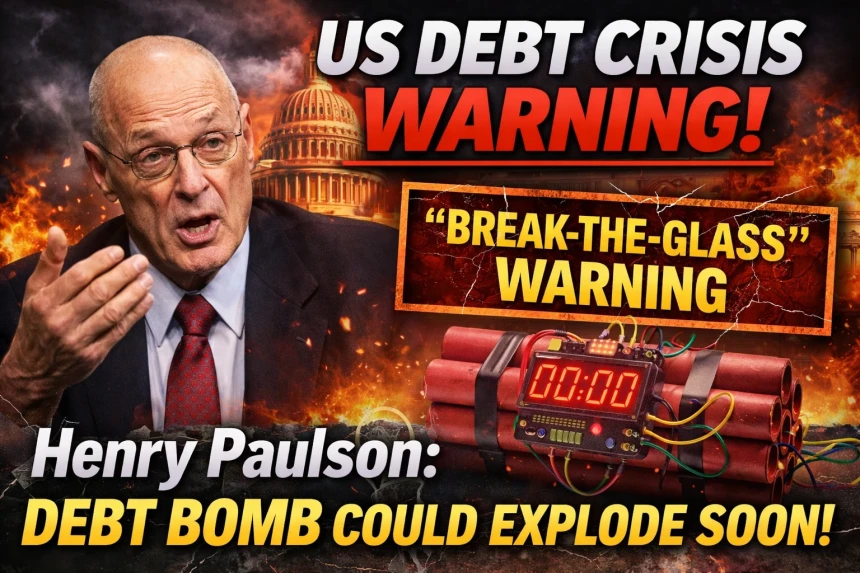

“Break-the-Glass” Moment: Henry Paulson Warns of Looming US Debt Disaster
Henry Paulson warns the US debt crisis is nearing a tipping point, urging a “break-the-glass” emergency plan before the situation spirals out of control.
Imagine waking up one morning to find that nobody wants to buy US government bonds anymore. Interest rates shoot through the roof, borrowing costs for everyone skyrocket, and the entire economy feels the shock. Sounds scary, right? Well, former Treasury Secretary Henry Paulson is ringing alarm bells about exactly that possibility, and he's calling on US authorities to get a backup plan ready right now.
In a recent interview on Bloomberg Television’s Wall Street Week with David Westin, Paulson didn't hold back. He said the US needs an "emergency break-the-glass plan" – something targeted and short-term – sitting on the shelf, ready to pull out the moment things hit a wall with Treasury demand. This comes amid growing worries about America's massive federal debt load, which he warned could trigger "vicious" effects if investors suddenly lose confidence.
Paulson knows a thing or two about financial crises. He was at the helm during the 2008 meltdown, and he made it clear that a debt-related crash in the Treasury market would be a whole different beast compared to what he dealt with back then.
Paulson’s Stark Warning: Why a Treasury Crisis Could Be BrutalDuring the chat, which jumped from the Iran conflict to US-China tensions, Paulson painted a concerning picture. He stressed that while the US is in a strong position to handle short-term global shocks, the long-term debt issue can't be ignored.
Right now, he believes the US can weather any immediate fallout from the Iran situation better than most other countries. When it comes to the bigger rivalry with China, he said America actually faces "far less economic challenges" than Beijing does.
Here’s how he broke it down: “We’ve got the biggest, most innovative, diverse economy; we’ve got the strongest, best-governed, most profitable companies; we live in a safe neighborhood; we’re energy independent.” Those are huge advantages. But then he pointed straight at the problems holding the US back: “Our challenges are debt, fiscal and political polarization.”
The $31 trillion Treasury market is the backbone of global finance. It’s considered super safe, and tons of investors around the world rely on it. But Paulson explained that if demand for these bonds dries up because of fears over the growing debt, it would be much harder to fix than the 2008 credit crisis.
Back in 2008, even though things were bad, the government still had the firepower to step in, clean up the mess, and stabilize things. But in a real public debt crisis? “When you hit the wall and you’re trying to issue Treasuries and the Fed is the only buyer and the prices of the Treasuries are going down and interest rates are up, that’s a dangerous thing,” he said. That kind of spiral could send shockwaves through everything from mortgages and car loans to business investments.
The Dreaded ‘Doom Loop’ That Keeps Experts Up at NightBudget watchers have been talking about this risk for years – a vicious cycle they sometimes call a “doom loop.” It starts when investors get nervous about the government’s swelling debt. They start demanding higher yields (basically higher interest rates) to lend money to the US. That pushes up the government’s own interest payments, which makes the deficit even bigger, which makes investors even more nervous… and around it goes.
In the worst-case scenario, if the Treasury can’t raise enough money to cover interest or pay back old bonds, many people assume the Federal Reserve would have to jump in as the buyer of last resort. That’s not ideal, and it could shake confidence even more.
Paulson admitted nobody knows exactly when this “wall” might appear. “People say, when are you going to hit the wall? I obviously don’t know, it’s impossible to know,” he said. But he was crystal clear on one thing: “When we hit it, it will be vicious, so we have to prepare for that eventuality.”
He also reminded everyone that the debt problem is just one of many headaches on policymakers’ plates right now, with situations unfolding in Ukraine and Iran. “There’s a lot of stuff going on. But we should not forget the deficit,” he added.
What Could the Emergency Plan Look Like?Paulson didn’t spell out the exact details of this “break-the-glass” plan. But he did offer some hope, pointing out that the US is still a very rich country with plenty of options if it starts acting soon.
Fixing the fiscal mess, he said, would mean a mix of things: increasing revenues through taxes, cutting or controlling expenses, and making big changes to major programs like Social Security and healthcare.
On the tax side, he believes it’s possible to bring in more money without hurting economic growth too much — mainly by closing loopholes and special preferences in the tax code instead of broad rate hikes that could slow things down.
The real challenge, though, isn’t coming up with ideas. It’s getting lawmakers in Congress to actually do something. Paulson, who has plenty of experience working with Congress, put it bluntly: “Congress doesn’t like to do unpleasant things until there is an immediate crisis.”
That’s why he wants this emergency plan prepared in advance — so it’s ready to deploy quickly when (or if) things get critical, without waiting for panic to set in.
The Current State of America’s Budget – Why the Worry Is GrowingTo understand why Paulson is speaking out, look at the numbers. Over the past three years, the US budget deficit has been running at about 6% of gross domestic product (GDP). That’s a really big shortfall – the kind you usually only see during wars or deep recessions and their aftermath. And according to the Congressional Budget Office, that gap is expected to stay around those levels for the next decade.
Even more worrying, the nonpartisan agency projects that America’s debt-to-GDP ratio will climb to a record high of 108% by 2030. That means the total debt would be even larger than the entire economy.
Bloomberg strategists have also weighed in on this. One expert, Ira Jersey, noted that higher debt-to-GDP levels tend to make the Treasury market more volatile: “We believe higher debt-to-GDP will mean shallower rallies and more pronounced selloffs” in US Treasuries. As the debt burden grows, the market becomes more sensitive to any bad news.
Why This Matters to Everyday AmericansEven if you don’t follow bond markets or fiscal policy closely, this stuff eventually touches your life. Higher interest rates caused by a loss of confidence in Treasuries could mean more expensive home loans, car financing, credit cards, and business borrowing. It could slow down economic growth, affect job markets, and put extra pressure on government programs that millions rely on.
Paulson’s message is basically this: The US has real strengths – innovation, strong companies, energy independence – but ignoring the debt problem could undo a lot of that advantage. He’s not saying doom is around the corner tomorrow, but he is urging leaders to get prepared now, while there’s still time and room to act.
He ended on a somewhat positive note: There’s good news because America is wealthy and has tools available. But it will take political will to raise revenues smartly, control spending, and reform big entitlement programs.
Wrapping It Up: A Call for Preparation, Not PanicHenry Paulson isn’t predicting an immediate collapse. What he’s doing is drawing from his experience in past crises to say: Let’s not wait until we’re in the middle of a fire to figure out how to put it out. Have a targeted, short-term emergency plan ready for the Treasury market, just in case.
In the meantime, the US continues to benefit from its strong economic fundamentals compared to many other nations. But the combination of rising debt, political divisions, and the risk of a “doom loop” means this is one issue that deserves serious attention from both sides of the aisle.
For now, markets are still functioning, and the US remains the world’s premier safe-haven for investors. But Paulson’s warning serves as a timely reminder that even the strongest economies need to stay vigilant about their fiscal health.
As global tensions simmer – whether in the Middle East or with China – and domestic debates over spending continue, keeping an eye on the national debt might become more important than ever. After all, as Paulson knows better than most, it’s always better to have a plan on the shelf than to scramble when the wall suddenly appears.
Quick Takeaways from Paulson’s Interview:
- The US has major strengths but debt and polarization are key weaknesses.
- A Treasury demand collapse would be “vicious” and harder to fix than 2008.
- Prepare a short-term “break-the-glass” plan now.
- Fixing the deficit needs higher revenues (smartly), spending discipline, and reforms to Social Security/healthcare.
- Congress usually acts only in a crisis – that’s why advance planning matters.
- Deficit has averaged ~6% of GDP recently; debt-to-GDP headed toward record 108% by 2030.