
$450K Crypto Scam Twist: Florida Man Gets Money Back
A Florida man lost $450K in a crypto scam—but a surprise investigation changed everything. Discover how the money was recovered and what it means for victims.
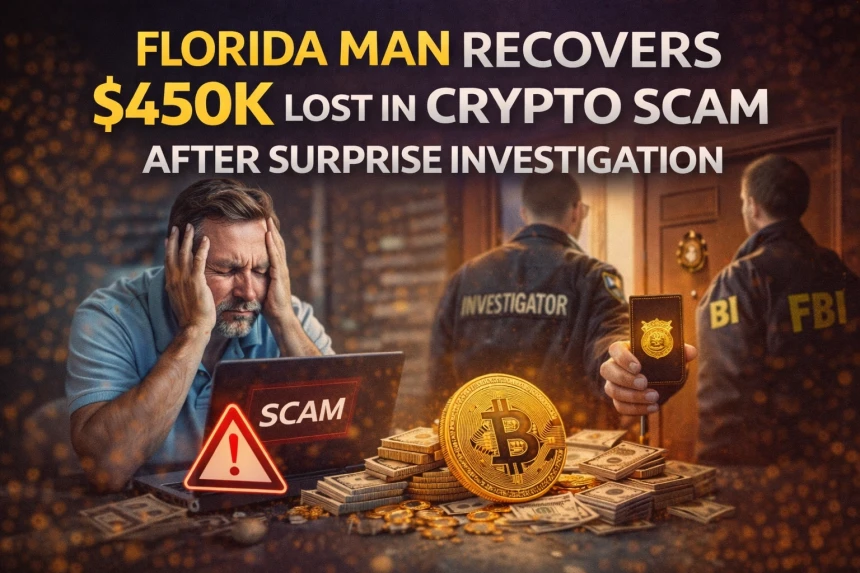
OCALA, Fla. – One guy in Florida figured his $450,000 was gone forever. He got pulled into one of those romance scams that turns into a shady crypto investment pitch. The scammers built up trust, talked sweet, and convinced him to send the money. When it all disappeared, he felt sick about it. He was so sure he'd never see a dime again that he didn't even call the police. Just tried to move on with the loss.
Then came the knock at his door.
Deputies from the Marion County Sheriff’s Office were standing there. They had some news that must have felt like a miracle: “We got your money back.”
Florida Attorney General James Uthmeier shared the story at a news conference on Tuesday in Ocala. That man was just one of several victims in a bigger case. Investigators ended up recovering a whopping $5.4 million in cryptocurrency — the largest amount ever clawed back in a single statewide operation in Florida.
The team behind it was the Office of Statewide Prosecution’s Cyber Fraud Enforcement Unit, known as CFEU. They worked closely with the Marion County Sheriff’s Office and managed to track down and recover every bit of the stolen crypto from this group of victims.
These folks came from six different counties right here in Florida, plus some from as far away as Massachusetts. The scam followed the same painful pattern: start with romance to gain trust, then push fake investment opportunities involving crypto.
Because of the recovery, $700,000 is now going back to the victims in Florida. Another $1.3 million will head to the people in Massachusetts. That’s real money returning to people who had written it off completely.
Marion County Sheriff Billy Woods spoke straight from the heart at the press conference. “It truly angers me that there are people in this world that have no problem making victims of citizens in our community,” he said. He pointed out that a lot of these scams hit senior citizens who are trusting and maybe not as familiar with all the online tricks. “Cyber scams and fraud may never go away,” Woods added, “but in Marion County and in Florida, we will come after those who choose to do this.”
Attorney General Uthmeier echoed that concern. He noted that older folks often end up as the main targets in these cyber scams. His office has made it a real priority to chase down the criminals and get as much money back as possible. “We are committed to tracking down these criminals and returning funds to their rightful owners,” he said.
This latest win is part of a strong run. In just the first three months of 2026, Uthmeier’s office pulled in about $3.3 million from cyber criminals. That one quarter alone set a new record and made up 45% of everything the CFEU has recovered since it started a little over 2.5 years ago.
All told, the unit has now brought back a total of $7.2 million to victims. On top of that, they’ve got another $12.6 million in crypto assets frozen right now while the courts sort things out. Once that process finishes, that money should go back to the people it belongs to.
Any leftover funds from this recent case that can’t be directly returned to victims will help pay for the CFEU’s work and other law enforcement efforts to hunt down more scammers.
The Marion County Sheriff’s Office has been a big partner in all this. So far, they’ve helped recover $6.5 million working with the CFEU — more than any other local agency in the state.
Sheriff Woods didn’t mince words about the future: “My detectives will keep hunting you down, and the Attorney General’s office will continue to aggressively prosecute these thieves. Cyber scammers have no place in Florida except behind a cell door.”
It’s a pretty strong message. Florida isn’t sitting back anymore. They’re actively going after these online fraud rings, following the digital money trails through crypto wallets and exchanges, and making sure victims get whatever can be saved.
If other police departments around the state — county or city level — want to jump in and help with these recovery efforts, they can reach out to the Office of Statewide Prosecution’s Cyber Fraud Enforcement Unit.
This whole story feels like one of those rare bright spots in the world of online scams. The Florida man who never even filed a report probably never expected to hear from law enforcement again. Getting that $450,000 back must have been an emotional rollercoaster — relief mixed with anger at the scammers who put him through it.
These romance-turned-investment scams are sadly common. They usually start with someone building an emotional connection online, then slowly steering the conversation toward “great investment opportunities” in crypto. Once the victim sends the money, it gets moved fast through different wallets, making it tough to trace. But this case shows that when different agencies work together — state prosecutors, local sheriffs, and cyber experts — they can actually follow those trails and bring money home.
Of course, the smartest move is still not falling for these scams in the first place. If someone you’ve only met online starts pushing you to send money or crypto for investments, that’s a huge red flag. Talk to family, check with a trusted advisor, and remember: if it sounds too good to be true, it almost always is.
For now, though, credit goes to the CFEU and the Marion County team for this big recovery. $5.4 million is serious money, and getting hundreds of thousands back to real people who thought it was lost forever feels like justice served.
It also sends a clear warning to the scammers out there: Florida is watching, they’re getting better at this, and they’re not letting you keep the money easily.