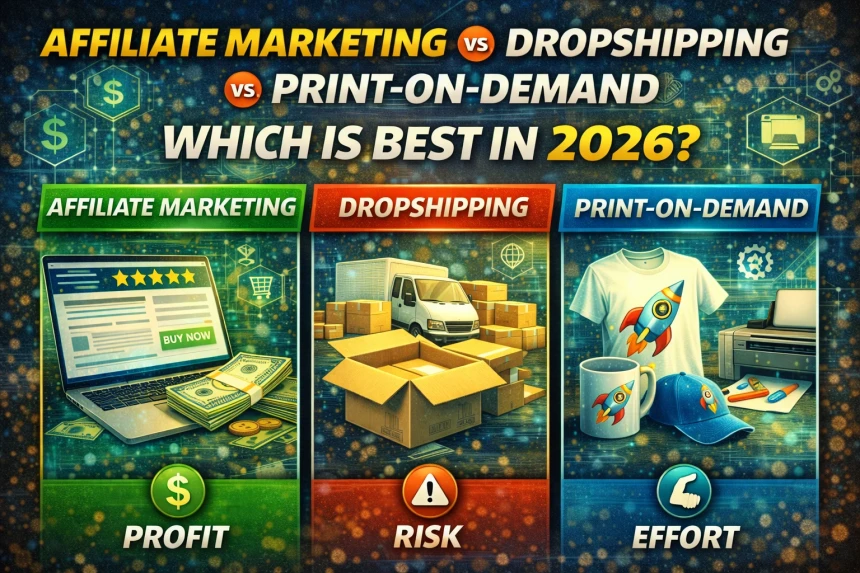

Which Online Business Wins in 2026? Affiliate vs Dropshipping vs Print-on-Demand
Compare affiliate marketing, dropshipping, and print-on-demand. Discover profits, risks, and which business model is best in 2026.
A few years back I tried all three models in some form or another, thinking one would be the magic ticket to easy online income. First, I dabbled in affiliate marketing with a simple blog recommending tools I actually used. Then I set up a dropshipping store chasing trending gadgets, only to watch ad costs eat my margins. Finally, I played with print-on-demand t-shirts featuring dumb inside jokes from my friend group. Each had moments where money trickled in, but each also had weeks where I questioned why I bothered. None was "passive" like the hype videos claim. In 2026, with AI tools making everything faster and competition fiercer, these three low-inventory models still attract beginners—but they reward different personalities and skill sets.
Most people don’t realize how much your tolerance for risk, customer drama, and creative work decides which one fits. Affiliate marketing is basically performance-based recommending with almost zero operational headaches. Dropshipping lets you sell products without touching them, but you own the storefront headaches. Print-on-demand sits in the middle—you design or curate custom stuff, but production and shipping stay outsourced. The global affiliate space hovers around $18-20 billion this year, dropshipping pushes toward $400+ billion in some estimates, and print-on-demand keeps climbing fast toward tens of billions thanks to personalization trends. But raw market size doesn't tell you which will actually pay your bills.
I know a guy who built a decent side income promoting SaaS tools through honest reviews—no store, no refunds, just content. Another friend ran a dropshipping store selling phone accessories and cleared a few thousand in profit some months before ad costs and returns killed the vibe. A third created niche POD designs for remote workers (funny "surviving another Zoom call" hoodies) and built a small loyal following that felt more like a brand than a random shop. Their outcomes differed because their strengths and pain tolerances differed. So let's break down the real differences without the guru gloss.
What Each Model Actually Looks Like Day to Day
Affiliate marketing means you promote other people's products or services and earn a commission when someone buys through your link. No inventory, no customer service, no refunds to handle. You create content—blog posts, videos, emails—and drive traffic. In 2026, recurring commissions from SaaS tools make it especially appealing because one good referral can pay you monthly for as long as the customer sticks around.
The upside is low risk. Startup costs are tiny—a domain, hosting, maybe $50-100 to start. You focus on creating helpful stuff instead of logistics. The downside? You control almost nothing. The merchant sets the price, handles fulfillment, and can change terms or end the program. Your earnings cap at whatever commission rate they offer (often 5-30%, sometimes higher on digital). If traffic dries up, income stops.
Dropshipping is closer to running an actual store. You build a Shopify site (or similar), list products from suppliers (often from AliExpress or specialized apps), and when someone orders, the supplier ships it directly to them. You set your own prices, so margins can hit 20-40% or more if you pick well and market smart. No warehouse, no packing boxes yourself.
But you do handle customer service—complaints about slow shipping, wrong sizes, damaged goods. Ads (Facebook, TikTok, Google) often drive the traffic, and that gets expensive fast. In 2026, competition is brutal, and supplier reliability still varies. One delayed shipment or quality issue can tank your reputation.
Print-on-demand (POD) combines elements of both. You design (or hire designs for) graphics, then upload them to platforms like Printful, Printify, or Gelato. They print on t-shirts, hoodies, mugs, posters, etc., only when someone orders. You sell through your own store, Etsy, or marketplaces. Full creative control over the product look, which helps with branding. Margins can be decent (20-50% on some items) because uniqueness lets you charge more.
The catch? You still deal with customer service for print quality issues or shipping delays. Designing or sourcing good artwork takes time and skill (or money). Trends move fast, so constant new designs help. It's slower to scale than pure dropshipping because success often ties to building an audience that likes your style.
Here's a small story from my own experiments: With affiliates, I once wrote a long review of a productivity app after using it during a messy freelance stretch. Shared the glitches and the wins. It brought steady commissions without me ever touching an order. With dropshipping, I sold wireless earbuds—profitable for a bit until returns piled up and ad costs rose. With POD, a simple "coffee because adulting is hard" mug design sold okay to my small email list, but scaling meant learning Canva better and testing dozens of variations. Each taught me something different about what I actually enjoy (or hate) doing daily.
Startup Costs and Speed to First Sale
Affiliate wins on low barriers. You can literally start with free platforms like a Substack or basic blog, join networks like Amazon Associates or ShareASale, and publish your first piece today. First commissions might take 1-6 months if you're building organic traffic, but some hit quicker with existing audiences or paid promotion.
Dropshipping needs more upfront. Shopify store ($29+/month), domain, apps for suppliers, and usually an ad budget ($500-2000 to test). You can launch a store in a weekend and get sales in days if ads work. But many burn through cash testing products before finding winners.
POD sits in between. Similar store setup costs as dropshipping, plus time or money for designs. Platforms like Printful integrate easily, so you can go live fast. First sales depend on traffic sources—organic via SEO/Pinterest or paid. Many creators start on Etsy with low overhead.
Most people don’t realize how much the "fast money" myth hurts beginners. Dropshipping can feel quick, but profitable stores often take months of testing and optimization. Affiliates reward patience with content. POD rewards creativity and consistency.
Profit Margins, Risk, and Scalability
Affiliate margins are fixed by the merchant—lower per sale but almost zero overhead. No bad inventory, no chargebacks on your end. Scalability comes from more content or bigger audiences. Recurring deals change the game; one solid SaaS referral compounds nicely.
Dropshipping can offer higher per-sale profits since you control markup, but real net margins shrink after ads, returns (often 5-15%+), and fees. Risk includes supplier issues, ad account bans, or market saturation. Scaling means spending more on ads or optimizing funnels—capital intensive.
POD margins vary by product and pricing strategy. Unique designs let you charge premium prices, and no inventory risk helps. But base production costs are higher than bulk manufacturing, so volume matters. Scaling often ties to brand building and audience—slower than pure ad-driven dropshipping but potentially more sustainable with loyal buyers.
In practice, affiliates feel "lighter" on the soul—no angry customers emailing about late packages. Dropshipping can print money during hot trends but crashes hard when ads stop working. POD builds something closer to a real brand, which feels satisfying but requires ongoing design energy.
One friend who tried dropshipping for fashion accessories made good money for six months until a supplier ghosted during peak season. Switched to POD with custom designs and built steadier (if smaller) income because customers bought into his style, not just the product. Another stuck with affiliates in the finance niche—lower drama, consistent checks, but he admits it never felt like "his" business.
Customer Service, Operations, and Daily Grind
Affiliate marketing is hands-off on operations. No refunds, no "where's my order" emails. You focus on content creation and traffic. In 2026, with better tracking tools, it's even smoother, though privacy changes mean you still nurture your own email list for control.
Dropshipping means you are the face of the brand. Customers contact you for everything. Expect to handle disputes, process refunds, and chase suppliers. Many store owners spend more time on support and ads than they expected. Automation apps help, but it's rarely set-and-forget.
POD is similar to dropshipping for service—customers complain to you about print quality or fit. But because products carry your designs, returns sometimes feel more personal. On the plus side, many POD platforms have good quality control now, and you can build community around your aesthetic.
I hated the customer messages in my short dropshipping attempt. One guy wanted a refund because the color looked different on his phone. With affiliates, the worst I got was a comment saying "this didn't work for me"—easy to reply helpfully without owing anything. POD felt in-between; when someone loved a design enough to wear it, the feedback was rewarding.
Which One Fits You in 2026?
If you love creating content, building audiences, and hate logistics, go affiliate. It's the most passive once content ranks, especially with recurring commissions in AI tools, SaaS, or education. Low risk, but you build someone else's brand.
If you enjoy product research, advertising, and don't mind some chaos, dropshipping might suit. Faster potential wins through trending items, but expect ad spend battles and supplier headaches. Good for quick testing.
If you're creative or want to build something that feels like yours, try POD. Design work can be fun (or outsourced), branding potential is higher, and personalization trends help. It grows slower but can create loyal fans who buy multiple items.
Many smart folks combine them eventually—use affiliates to promote your own POD or dropshipping store, or review products you sell via dropshipping. Hybrid approaches often win long-term.
Real talk on success rates: Most people in all three make little or nothing because they quit during the slow months or copy without adding value. The ones who hit consistent income treat it like a business—test, track, iterate. I've seen people clear a few thousand monthly in each model, but rarely without 6-18 months of consistent effort.
Trends in 2026: AI helps with content for affiliates and designs for POD. Video (Shorts, Reels) drives traffic across all. Privacy rules push everyone toward owned audiences like email. Sustainability matters more—POD wins points here with made-to-order. Competition is higher everywhere, so niche down and add personality.
Common Pitfalls and How to Avoid Them
Quitting too early. All three have a ramp-up period where numbers look dead.
Spreading too thin. Pick one model and one niche first.
Ignoring the boring parts. Affiliates need consistent content. Dropshipping needs ad testing and supplier vetting. POD needs design iteration.
Chasing trends without strategy. Hot products die fast in dropshipping and POD.
Not tracking real numbers. Use analytics, know your costs, and be honest about time invested.
One imperfect lesson from my tries: I burned money on dropshipping ads before proving product demand organically. With affiliates, I wasted time on broad topics before niching down. POD taught me that even good designs flop without the right audience. Each failure was cheaper than a traditional business, though.
Wrapping It Up: No Perfect Winner, Just Better Fits
Affiliate marketing, dropshipping, and print-on-demand all beat getting a boss in some ways—no commute, flexible hours, global reach. But none is easy money. Affiliate gives freedom with less control. Dropshipping offers margin potential with more headaches. POD blends creativity and ownership with ongoing design demands.
In 2026, the smartest path might be starting with affiliates to learn marketing without risk, then layering in POD or dropshipping once you have an audience or skills. Or test small in one while keeping a day job.
I know regular people making side income in each—enough for extra bills, travel, or quitting parts of their 9-5. The difference wasn't luck; it was matching the model to what they didn't hate doing daily and sticking with it through flat periods.
If you're reading this wondering where to start, ask yourself: Do I enjoy writing or making videos? Am I okay with customer emails? Do I like designing or researching products? Your honest answers point the way better than any "best model" list.
Pick one. Start small and messy. Publish that first affiliate post, launch a simple store with a few products, or upload your first POD design. Track what happens. Adjust. The models aren't going away—they're just evolving with better tools and pickier buyers.
The internet still rewards people who show up consistently and solve real problems, whether through recommendations, curated products, or custom designs. Choose the headache you're willing to live with, then get to work. That's how most sustainable online income stories actually unfold—not with viral launches, but with quiet persistence.
Some days you'll check stats and feel like quitting. Other days a random sale or commission hits from something you set up months ago. That's the weird rhythm that keeps it interesting. Go try one. See which clicks with how your brain works. The rest is just details.